 96 382 55 77


Bruxism is the involuntary habit of clenching or grinding teeth without a functional purpose, which frequently occurs during sleep or periods of high nervous tension, leading to tooth wear, muscle pain, headaches, and deterioration of the temporomandibular joint.
The problem with bruxism is that patients often don’t know they have it until the damage is visible or the pain becomes unbearable. While sleeping, masticatory muscles exert forces of up to 400 kilograms per square centimeter on the teeth —ten times more than normal chewing— without the body’s natural alarm system stopping it. By the time a patient visits the dentist, the enamel is already destroyed, muscles are contracted, and the joint is damaged.
At Asensio Dental Clinic, Dr. Lucía Asensio Romero (Registration No. 46002287) diagnoses and treats bruxism with a comprehensive approach that combines custom-made night guards, treatment for associated TMJ dysfunction, and, when indicated, botulinum toxin. The first visit is completely free.
Symptoms of bruxism and how to detect it in time
Early diagnosis of bruxism is fundamental to halting its consequences before damage becomes irreversible. The problem is that most patients are unaware they grind their teeth during sleep and only seek consultation when pain or dental deterioration is evident. Knowing the warning signs allows for action before the situation worsens.
Tooth wear is the most objective clinical sign of bruxism. Constant friction between teeth destroys enamel in a characteristic way: tooth surfaces flatten, incisal edges become straight and uniform, and in severe cases, the loss of structure is so marked that the teeth appear shortened. Enamel is the hardest tissue in the human body, but it cannot regenerate: once destroyed, it does not come back. Exposure of the underlying dentin causes intense hypersensitivity to cold, heat, and acidic foods.
Muscle pain is the symptom that most frequently brings patients to the clinic. Sustained contraction of the masseter and temporal muscles during sleep generates diffuse muscle pain located in the jaw, temples, cheeks, and neck. This pain is at its peak upon waking —coinciding with the end of the nighttime bruxism episode— and can easily be confused with a tension headache or neck pain. Recurrent morning headaches in the temporal area are a cardinal sign of bruxism that many patients have attributed to other causes for years.
Deterioration of the temporomandibular joint (TMJ) is the most serious consequence of untreated bruxism. Chronic overload on the TMJ produces inflammation of the articular disc, cartilage wear, clicking, and jaw locking. In advanced cases, temporomandibular osteoarthritis may develop, permanently limiting the opening of the mouth. The clinical examination at our clinic includes palpation of the masticatory muscles, evaluation of jaw opening, and analysis of tooth wear patterns to quantify the severity of bruxism and design the most appropriate treatment plan.
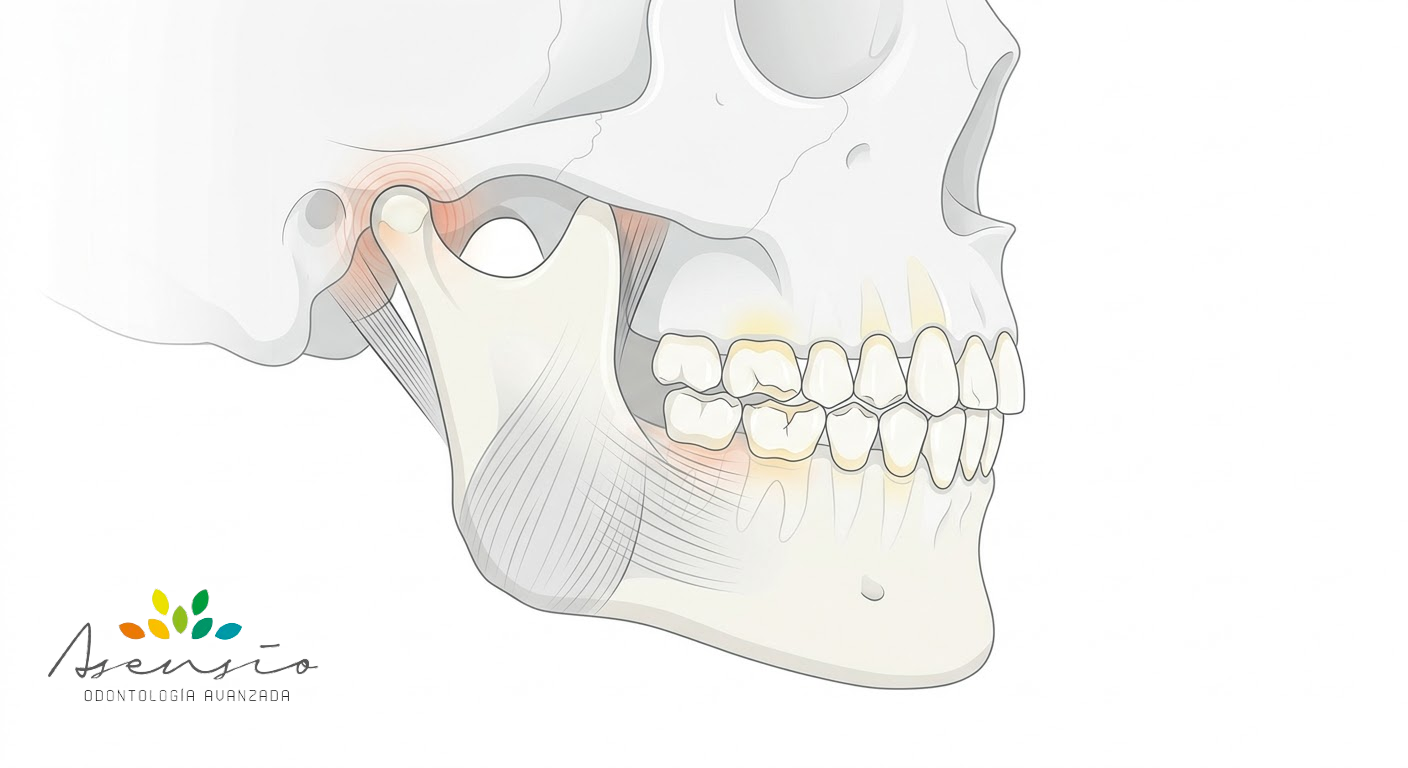
Causes of bruxism
Bruxism is a multifactorial pathology involving psychological, neurological, occlusal, and genetic factors. None of these alone fully explains the disorder, which complicates both the diagnosis of the primary cause and the design of a treatment that addresses all involved factors.
Stress and anxiety are the most frequent and scientifically well-documented triggers. It is not necessary to be going through a life crisis to suffer from them: chronic work stress, sleep problems, generalized anxiety, or even excessive screen use before bed keep the nervous system in a state of hyperactivity that translates into involuntary muscle activity during sleep. From the perspective of holistic dentistry, bruxism is often the physical expression of unprocessed emotional tension.
Occlusal factors —bite interferences, poorly fitted restorations, or unreplaced missing teeth— can trigger or aggravate bruxism by generating occlusal instability that the neuromuscular system attempts to compensate for with clenching. Neurological factors include sleep disorders —nighttime bruxism occurs during light sleep phases or during micro-awakenings—, the use of certain medications like SSRI antidepressants, and the consumption of caffeine, alcohol, and tobacco, which increase nighttime muscle activity. There is also a proven genetic component: the probability of suffering from bruxism is significantly higher if there is a family history of the condition.
Treatment of bruxism
The treatment of bruxism is multimodal: given that the condition has multiple causes, the most effective approach combines several simultaneous therapeutic strategies. The goal is not only to protect the teeth from wear —which is the immediate priority— but also to reduce nighttime muscle activity, relieve pain, and treat joint consequences when present.
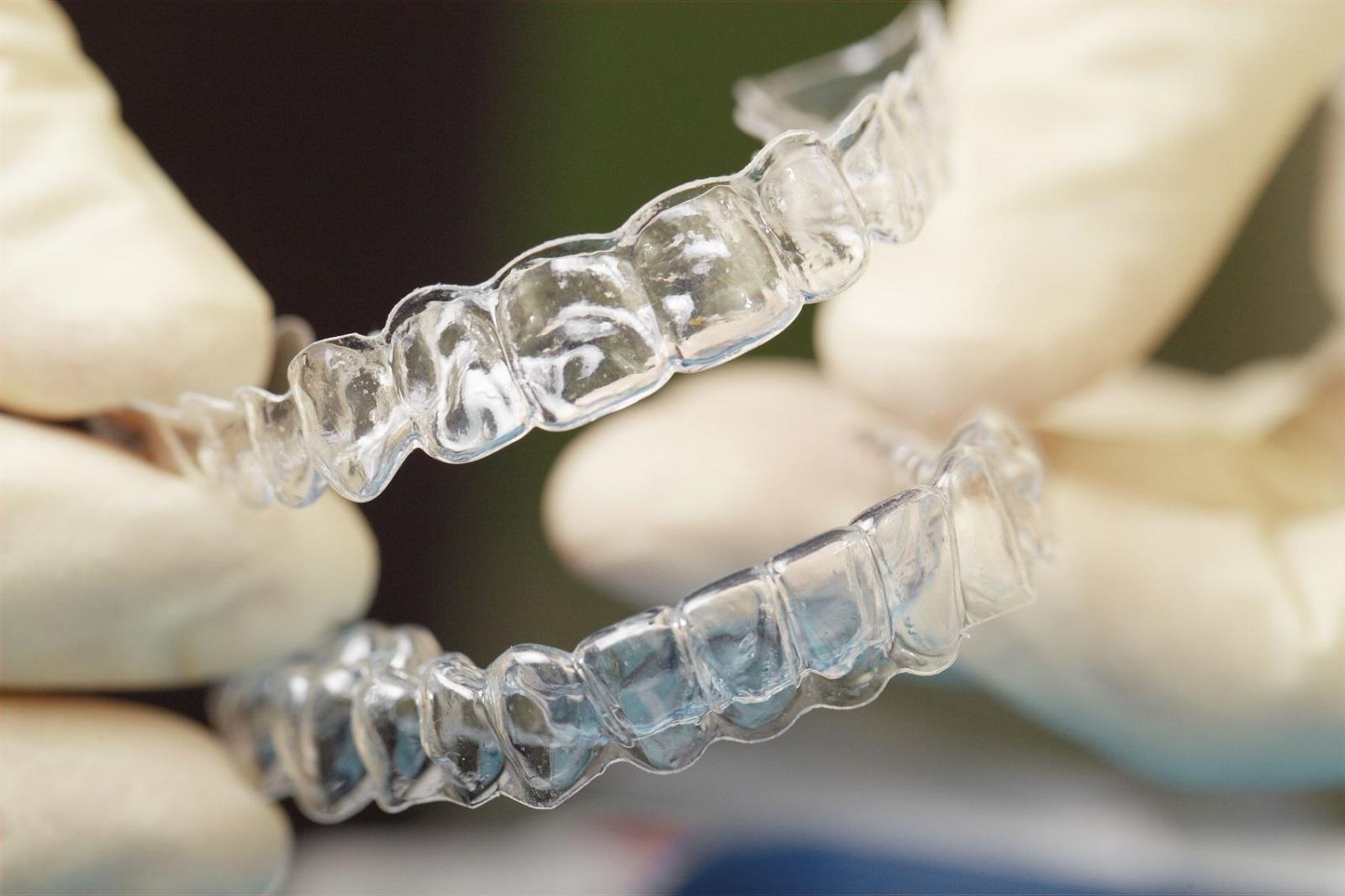
A custom-made night guard is the first-line treatment for bruxism. Manufactured to measure from digital records of the patient’s teeth, the guard interposes a resin barrier between the arches that protects the enamel, redistributes clenching forces, and repositions the jaw in a position of neuromuscular balance that reduces involuntary muscle activity. Unlike over-the-counter guards —mass-produced and without occlusal adjustment— professional guards are designed for each patient’s specific occlusion and adjusted in-clinic with an articulator.
Botulinum toxin in the masseter and temporal muscles is the second line of treatment when the guard does not provide sufficient relief or when muscle hyperactivity is severe. It reduces the muscle’s maximum contraction capacity for 3-6 months, interrupting the clenching cycle and allowing joint and muscle recovery. For patients with significant orofacial pain, we add orofacial physiotherapy with stretching techniques and dry needling of muscle trigger points.
Frequently asked questions about bruxism
How do I know if I have bruxism?
The most frequent signs are visible tooth wear —flat surfaces, chipped edges—, jaw or temple pain upon waking, recurrent morning headaches, muscle tension in the face and neck, and the sound of teeth grinding that a partner may sometimes hear. Diagnostic confirmation is performed by the dentist through clinical examination and analysis of the wear pattern.
Is there a cure for bruxism?
Bruxism does not have a definitive cure in the sense that there is no treatment that eliminates it permanently, but it does have a very effective management that protects teeth from wear, relieves pain, and improves quality of life. The combination of a night guard, stress management, and, when indicated, botulinum toxin, allows most cases to be controlled satisfactorily.
Can children have bruxism?
Yes. Childhood bruxism is common —affecting between 6% and 50% of children according to different series— and in most cases, it is transient and disappears with the change of dentition. However, when it is intense or persistent, it can produce tooth wear and TMJ symptoms that require treatment. If your child grinds their teeth at night or complains of jaw pain, an assessment at our clinic is recommended.