 96 382 55 77


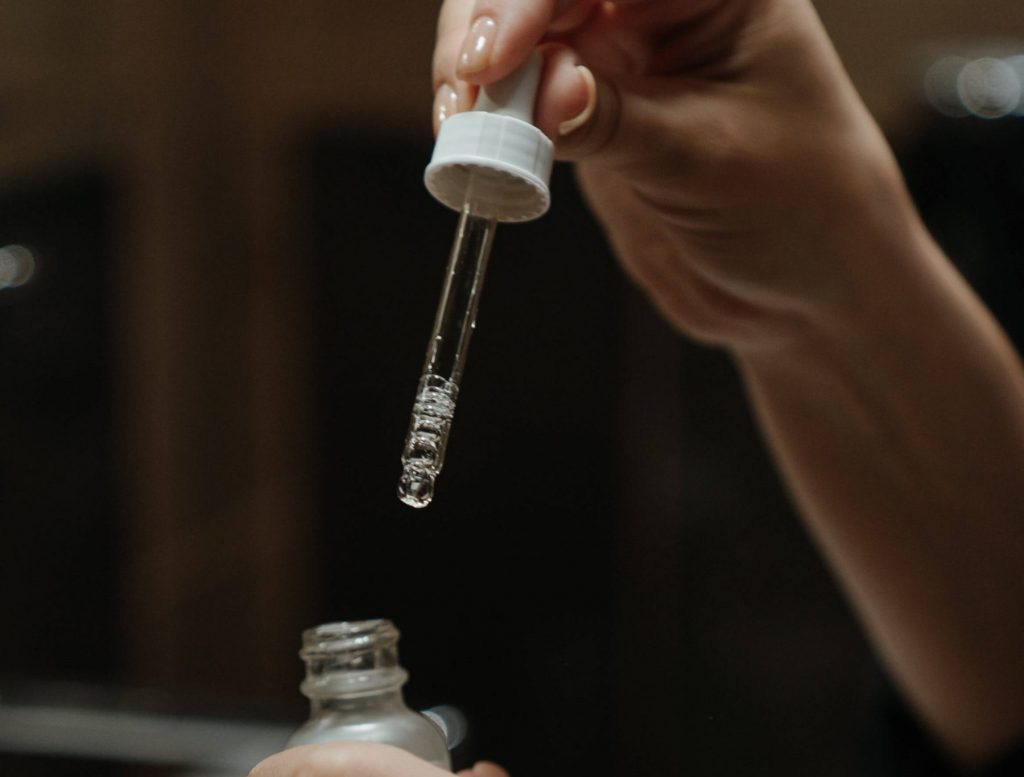
Hyaluronic acid in cosmetic dentistry is a natural substance present in the body that, when applied through infiltrations in the perioral and gingival areas, hydrates soft tissues, regenerates the gums, and rejuvenates the smile without surgery, pain, or altering facial expressions.
Over the years, perioral tissues lose hydration, lips lose volume, and the so-called “smoker’s lines” deepen with every smile. Many patients are unaware that these signs of aging can be corrected in a single 15-20 minute session as a natural complement to cosmetic dental treatments. If you want to discover all available treatments, visit our cosmetic dentistry in Valencia page.
Dr. Lucía Asensio Romero (Registration No. 46002287) is the specialist responsible for perioral hyaluronic acid treatments at Asensio Dental Clinic. The treatment is part of our dental rejuvenation protocol and can be performed independently or combined with teeth whitening and aesthetic reconstructions in the same session.
What is hyaluronic acid and why is it used in dentistry?
Hyaluronic acid is a naturally occurring polysaccharide found in the human body in tissues such as the epidermis, connective tissue, cartilage, and synovial fluid. Its main quality is the ability to attract and retain water in a specific area, keeping tissues hydrated, firm, and elastic.
As the years go by, the body produces less hyaluronic acid than it destroys, leading to a progressive loss of hydration and firmness in the perioral tissues. The visible result is thinner lips, pronounced nasolabial folds, smoker’s lines above the upper lip, and a general loss of brightness in the smile area.
In dentistry, hyaluronic acid also has specific clinical applications beyond perioral aesthetics: it contributes to the regeneration of healthy gingival tissue, helps reduce inflammation in patients with periodontal pathology, and can be applied in cases of facial bone mass loss as a complement to implantology treatments. Its biocompatibility is excellent—being a natural substance of the body, it does not generate any type of rejection or allergic reaction.
Types of hyaluronic acid used in cosmetic dentistry
Not all hyaluronic acid products are the same. The choice of the right type depends on the area to be treated and the desired effect. At Asensio Dental Clinic, we exclusively use medical-grade hyaluronic acid, differentiating between two main formulations according to the needs of each case.
| Type | Characteristics | Main Indication |
|---|---|---|
| Cross-linked | Dense gel — greater stability and duration in tissues | Filling of nasolabial folds, smoker’s lines, and lip volume |
| Non-cross-linked | More liquid composition — shorter duration | Superficial hydration of lips and perioral area |
For perioral infiltrations, we use medical-grade cross-linked hyaluronic acid, which offers stable results for 9 to 12 months. The choice of concentration and volume to be infiltrated is determined by Dr. Lucía Asensio Romero in the prior assessment, always seeking a natural result that complements the patient’s smile without altering their expression.
In which areas is hyaluronic acid applied in cosmetic dentistry?
The applications of hyaluronic acid in the context of cosmetic dentistry are concentrated in the perioral area—the area surrounding the mouth that frames the smile. At Asensio Dental Clinic, we work on the following areas based on the aesthetic needs of each patient.
| Application Area | Result |
|---|---|
| Nasolabial folds | Reduction of lines extending from the nose to the corners of the mouth |
| Smoker’s lines | Smoothing of vertical wrinkles above the upper lip |
| Lip contour and volume | Definition of the lip profile and recovery of lost volume |
| Gums and gingival tissue | Tissue regeneration in cases of gingival recession or periodontitis |
What is the hyaluronic acid infiltration process like in the clinic?
The perioral hyaluronic acid treatment at Asensio Dental Clinic is an outpatient procedure performed in a single session lasting between 15 and 20 minutes. Before starting the infiltrations, we apply a topical anesthetic cream to the area to be treated to minimize any discomfort during the procedure.
The infiltrations are performed with very fine-gauge needles at strategic points in each area. The result is immediately visible—the treated area gains volume, hydration, and luminosity at the exact moment of application. During the following 24-48 hours, slight local swelling may appear, which disappears spontaneously without the need for treatment.
There is no recovery period: the patient can resume their usual activity immediately after the session. The result is maintained between 9 and 12 months, after which a maintenance session can be performed to prolong the effect.
Hyaluronic acid as a complement to dental rejuvenation
Perioral hyaluronic acid is the final component of the dental rejuvenation protocol at Asensio Dental Clinic. Combined with teeth whitening, aesthetic contouring, and composite reconstructions, it completes an integral transformation of the smile that simultaneously addresses the teeth, gums, and perioral tissues.
The result of the combined treatment is significantly superior to any of its components separately, because each element enhances the effect of the others. A whiter and more proportionate smile gains much more when the lips that frame it are also hydrated and defined. Dr. Lucía Asensio Romero evaluates in each case which components are necessary and in what order to apply them to maximize the final result.
Frequently asked questions about hyaluronic acid in cosmetic dentistry
Does hyaluronic acid in the lips look natural?
Yes, when applied with aesthetic criteria and the appropriate amount. At Asensio Dental Clinic, the goal is not to exaggerate lip volume but to recover the proportion and definition the patient had years before. The amount infiltrated is always conservative, and the result is completely natural.
Does hyaluronic acid treatment hurt?
Not significantly. We apply topical anesthetic cream before the infiltrations, which minimizes the sensation of the needles to a slight pressure. Most patients describe the procedure as very tolerable. The most frequent discomfort is slight swelling in the first 24-48 hours post-treatment.
How long does the effect of perioral hyaluronic acid last?
The cross-linked hyaluronic acid we use at Asensio Dental Clinic has an average duration of 9 to 12 months. Variability depends on the patient’s metabolism, the treated area, and hydration habits. With annual maintenance sessions, the result can be prolonged indefinitely.
Can hyaluronic acid be combined with teeth whitening?
Yes, and it is precisely the combination we apply in the dental rejuvenation protocol. Whitening is performed first to establish the new base shade of the smile, and hyaluronic acid is applied at the end of the session to complete the perioral transformation. The combined result is immediate and completely natural.
Does hyaluronic acid help with gingival recession?
Yes. Hyaluronic acid has regenerative properties on the gingival tissue that can be beneficial in cases of mild recession or as a complement to periodontal treatments. Its application in the gums requires a prior evaluation of the patient’s periodontal status to determine if it is the most appropriate technique for each case.