 96 382 55 77


Fixed dental prostheses are restorations that are permanently cemented or screwed onto prepared teeth or titanium implants to replace one or more missing teeth. They restore masticatory function and aesthetics without the patient being able or needing to remove them.
Losing a tooth has consequences that go beyond aesthetics. Without the chewing stimulus of the root, the bone that supported it begins to resorb within weeks. Adjacent teeth migrate toward the empty space, altering the bite. Mastication becomes unbalanced, overloading other teeth. A fixed prosthesis placed in time stops all these consequences before they take hold.
At Asensio Dental Clinic, Dr. Lucía Asensio Romero (Registration No. 46002287) designs and places fixed prostheses using CAD/CAM technology and state-of-the-art materials. The first visit is completely free of charge.
Types of Fixed Dental Prostheses
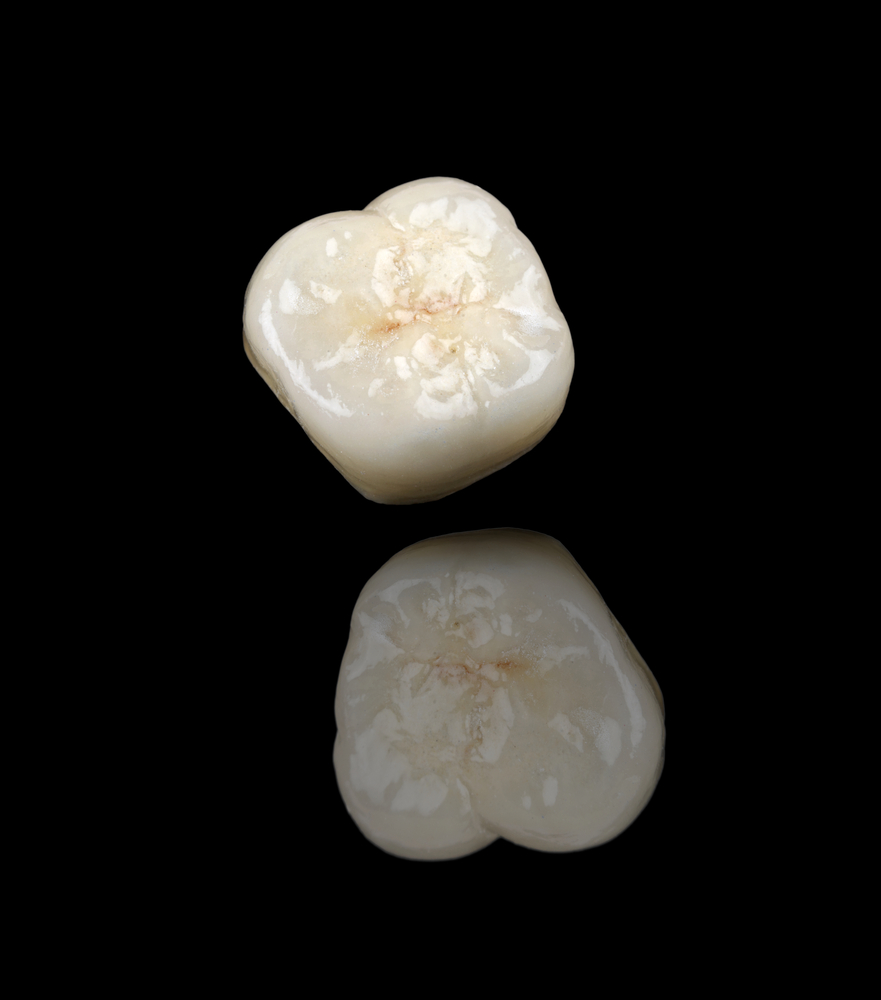
Fixed prostheses are classified according to the number of teeth they replace and the support upon which they are anchored. A dental crown is a single-unit prosthesis that completely covers a damaged tooth or an implant, restoring its shape, function, and aesthetics. A fixed bridge replaces one or more missing teeth by anchoring to the teeth adjacent to the gap, which must be shaved down (prepared) to serve as supports — the disadvantage is that healthy teeth must be reduced to hold the restoration.
The alternative that avoids this drawback is the implant-supported fixed prosthesis: instead of relying on prepared natural teeth, the crown or bridge is screwed or cemented onto titanium implants that act as artificial roots. This option keeps adjacent teeth intact and stimulates the bone just as a natural root would, preventing bone resorption. For all the details on this option, check the price in our article on the cost of fixed prostheses.
Regarding materials, current fixed prostheses are mostly made of ceramic — zirconia or feldspathic porcelain — which offer aesthetics indistinguishable from natural teeth and eliminate the dark metallic shadow produced by old metal-porcelain crowns. For more information on available materials, visit our pages on zirconium crowns and porcelain crowns in Valencia.
| Type | Indication | Main Advantage |
|---|---|---|
| Crown on tooth | Heavily damaged but present tooth | Protects the tooth and restores function |
| Fixed bridge on teeth | 1-3 missing teeth with healthy adjacent teeth | No implants, faster placement |
| Crown on implant | Missing tooth with sufficient bone | Does not affect adjacent teeth |
| Bridge on implants | Several missing teeth | Maximum stability, preserves bone |
The Process of Placing a Fixed Prosthesis
The process for placing a fixed prosthesis on teeth begins with the preparation (shaving) of the abutment teeth — those that will serve as supports — which are reduced in height and thickness so the crown or bridge can fit over them. Digital impressions are taken with an intraoral scanner, and a temporary prosthesis is installed to protect the prepared teeth during the fabrication period, which in our clinic ranges between 10 and 15 days. When the final prosthesis arrives from the lab, it is tested, the occlusion (bite) is adjusted, and it is permanently cemented.
For patients with bruxism, we always recommend supplementing the fixed prosthesis with a nocturnal night guard to protect the ceramic restorations from wear due to clenching.
This specialty is part of our other dental treatments in Valencia area.
Frequently Asked Questions about Fixed Prostheses
How long does a fixed prosthesis last?
With proper maintenance, a crown or bridge on teeth lasts between 10 and 15 years. Implant-supported prostheses have higher durability and can last a lifetime with proper care. The factor that most reduces durability is untreated bruxism, which can fracture the ceramic within a few years.
Is it painful to get a fixed prosthesis?
The preparation of the abutment teeth is always performed under local anesthesia, so it is not painful during the session. For the first few days, there may be sensitivity in the prepared teeth, which subsides spontaneously. For patients with dental anxiety, we offer the option of conscious sedation with nitrous oxide.
What is the difference between a fixed and a removable prosthesis?
A fixed prosthesis is permanently cemented or screwed and cannot be removed. A removable prosthesis can be taken out for cleaning. Fixed options offer greater comfort, stability, and the feeling of a natural tooth, but require healthy teeth or implants for anchoring. Removable options are indicated when there are not enough support teeth or when the patient prefers a non-surgical solution.