 96 382 55 77


A root canal (endodontics) is a dental procedure that removes infected or necrotic dental pulp from inside the root canals, cleans, shapes, and seals them hermetically to save the tooth and eliminate the infection without needing extraction.
Many patients fear a root canal more than the infection that causes it. This is a fear inherited from old techniques that are no longer valid today. With modern local anesthesia, microscopes, and lasers, a well-performed root canal is a painless procedure that lasts between 45 and 90 minutes and saves a tooth that would otherwise be lost.
At Asensio Dental Clinic, Dr. Lucía Asensio Romero (Registration No. 46002287) performs root canals using a ZEISS microscope and FOX III laser with a 99% success rate. The first visit is completely free.
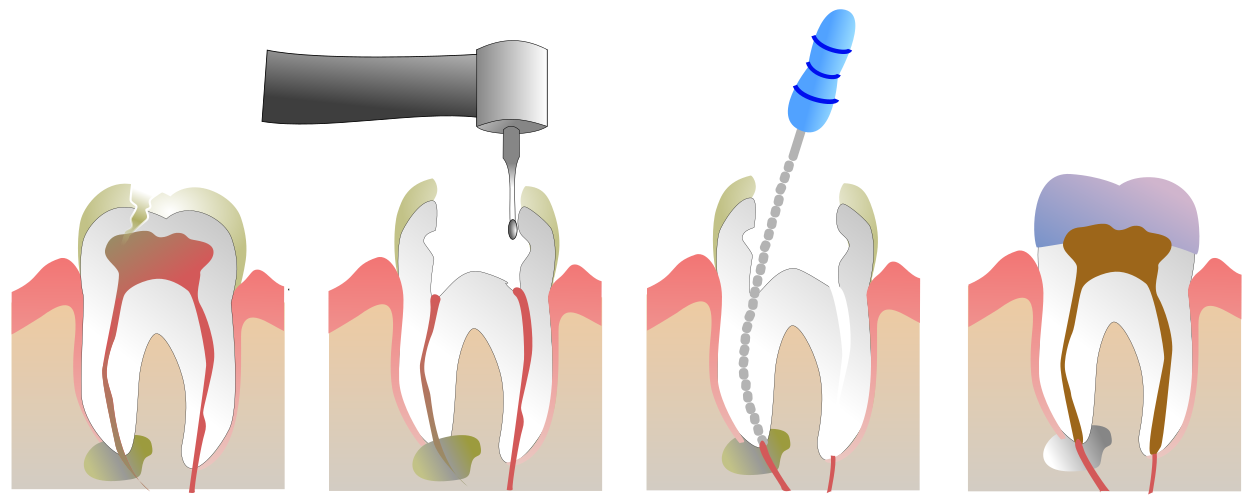
When is a root canal necessary?
A root canal is indicated when the dental pulp has been invaded by bacteria and can no longer recover spontaneously. The most common cause is a deep cavity that has penetrated through the enamel and dentin to reach the pulp chamber. Once bacteria access the pulp, the infection inexorably progresses toward the root apex and periapical bone if not treated.
Other reasons leading to a root canal include dental trauma—blows that fracture the tooth or damage the blood supply to the pulp—deep or repeated restorations on the same tooth that chronically irritate the pulp, and root fractures. In some cases, the pulp necroses without producing noticeable symptoms, and the periapical lesion is discovered during a routine control X-ray.
Warning symptoms indicating the need for urgent evaluation include spontaneous pain that appears without stimulus or persists for several minutes after removing cold or heat, pain when biting or pressing the tooth, swelling in the gums or face, the tooth changing color toward grayish tones, and the appearance of a fistula—a small “pimple” on the gum that drains pus.
Types of root canal based on the number of canals
The complexity of a root canal depends fundamentally on the number of roots and canals of the affected tooth, which varies according to its position in the dental arch. This classification determines the treatment time and, in part, the cost of the procedure.
| Type | Roots | Teeth |
|---|---|---|
| Single-root | 1 root, 1 canal | Incisors, canines |
| Double-root | 2 roots, 2 canals | Premolars |
| Multi-root | 3 or more roots | Molars |
Root Canal with ZEISS Microscope and FOX III Laser
The combination of the ZEISS microscope and the FOX III laser is what allows us to guarantee a 99% success rate in our clinic. The microscope provides a magnification of up to 25x with coaxial lighting that allows seeing the inside of the canal with clarity impossible to the naked eye: additional hidden canals, isthmuses, root fractures, and pulp debris that would go unnoticed with conventional techniques. The FOX III laser acts as a high-power bactericide in the dentinal tubules—the micro-channels inside the dentin where bacteria hide from chemical irrigants—disinfecting areas inaccessible to conventional files and irrigants.
This technology is particularly important in root canal retreatments—cases where a previous root canal has failed and the canal must be treated again—where the diagnostic and technical difficulty is greater and where the advantage of the microscope and laser is more decisive for the result.
For more information on the specific rotary technique, consult our page on rotary endodontics in Valencia. This specialty is part of our other dental treatments area in Valencia.
Frequently asked questions about root canals
Does a root canal hurt?
No. A root canal is always performed under local anesthesia that completely eliminates the sensation of pain during the procedure. After the session, there may be slight sensitivity in the treated tooth for 2-3 days, which is controlled with common analgesics. The pain patients associate with a root canal is the pain of the previous infection, not the treatment.
How long does the treatment last?
A simple root canal on a single-root tooth can be resolved in a single 45-60 minute session. A multi-root molar may require one or two 60-90 minute sessions. In cases of active infection with an abscess, the canal is sometimes left open for a few days to drain before sealing it.
Do I need a crown after a root canal?
It depends on the degree of tooth destruction. If the loss of structure is significant, a crown protects the tooth from fractures and significantly extends its useful life. If enough dental walls remain, a composite reconstruction or a ceramic inlay may suffice. The specialist evaluates each case individually.