 96 382 55 77


A bite guard (night guard) is a custom-made dental device placed over the upper or lower teeth during the night to protect them from wear, fracture, and the muscle overload produced by bruxism and temporomandibular joint dysfunction.
Clenching or grinding your teeth during sleep exerts a force on the enamel up to ten times greater than normal chewing. This accumulated pressure destroys enamel, fractures restorations, overloads masticatory muscles, and deteriorates the temporomandibular joint. Without a guard, the damage is progressive and irreversible: enamel does not regenerate.
At Asensio Dental Clinic, Dr. Lucía Asensio Romero (Registration No. 46002287) designs and adjusts custom bite guards with digital technology, ensuring a precise fit and maximum protection. The first visit is completely free.
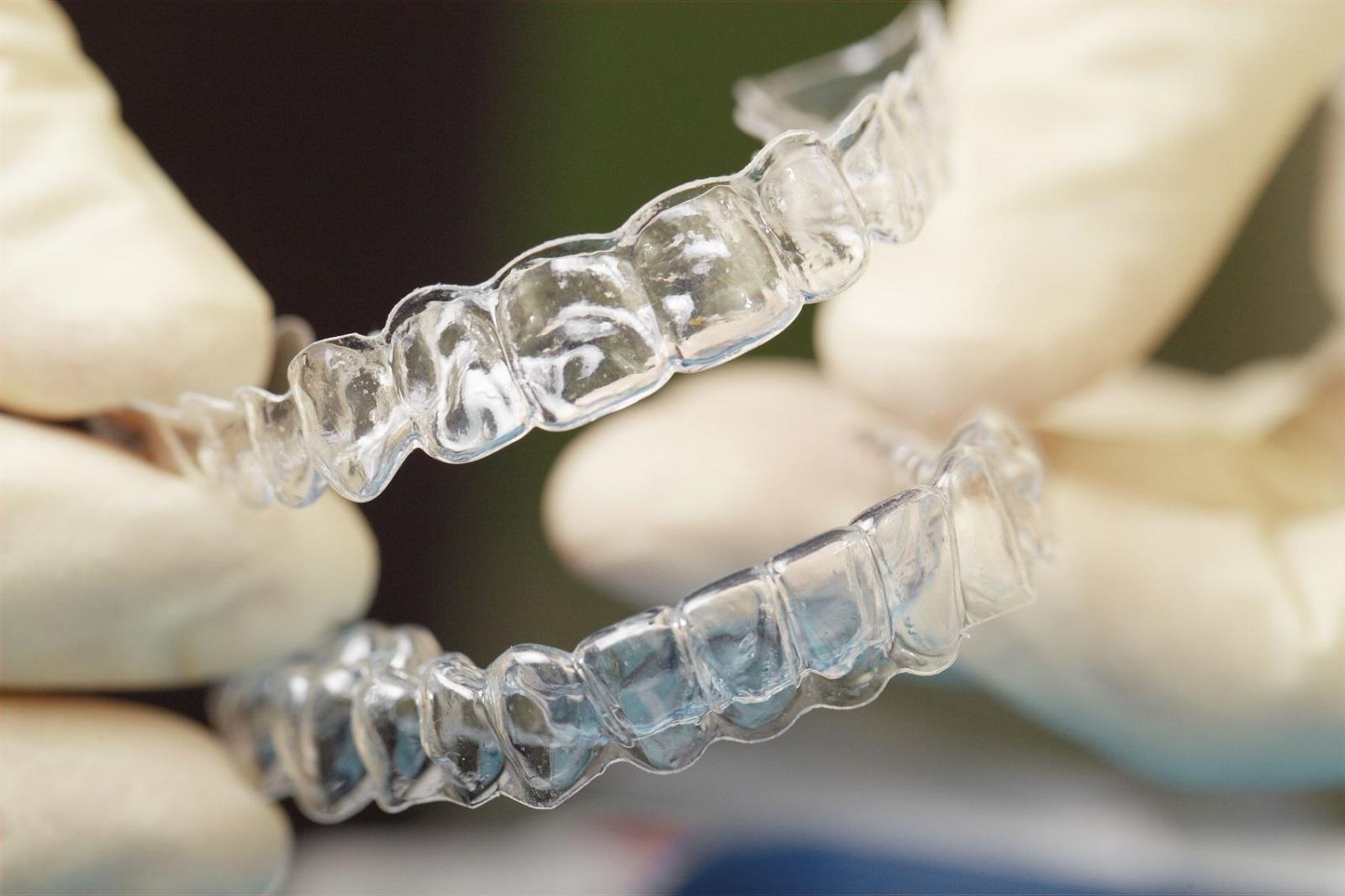
How does a bite guard work?
A bite guard acts on the stomatognathic system — teeth, muscles, and joint — in three simultaneous ways. First, it interposes a physical barrier between the teeth of both arches that absorbs and redistributes clenching forces, protecting enamel and restorations from friction wear. Second, it repositions the jaw in a musculoskeletal rest position that reduces tension in the masticatory muscles and unloads the temporomandibular joint. Third, it acts as a neuromuscular deprogrammer: by changing the proprioceptive information that reaches the brain from the teeth, it interrupts the cycle of involuntary clenching that occurs during sleep.
The effectiveness of the guard depends fundamentally on its adjustment precision. A guard that does not fit the patient’s occlusion perfectly can redistribute forces incorrectly and worsen symptoms instead of improving them. This is why pharmacy guards — mass-produced without impressions — are not a valid alternative to a professional dental guard. At Asensio Dental Clinic, we manufacture each guard from digital impressions of the patient and adjust it in the clinic with an articulator to guarantee that the mandibular position it adopts is therapeutically correct for each case.
The adaptation time to the guard varies between patients: some get used to it from the first night, while others need one or two weeks to integrate it into their sleep routine. It is common for the patient to notice increased saliva production or slight discomfort during the first few nights — both effects disappear quickly. Improvement in muscle and joint pain is usually perceived within the first two to four weeks of continuous use.
Benefits of a bite guard
The benefits of a bite guard go beyond simple dental protection. By acting on the muscle and joint component of bruxism, it produces improvements that the patient perceives in multiple aspects of daily life.
| Benefit | Mechanism | Result for the patient |
|---|---|---|
| Enamel protection | Physical barrier between arches | Stops wear and prevents dental fractures |
| Muscle pain relief | Mandibular repositioning | Reduces tension in masseter and temporal muscles |
| Headache improvement | Reduction of muscle hyperactivity | Decreases morning tension headaches |
| TMJ unloading | Reduction of joint pressure | Relieves pain and joint clicking |
| Implant protection | Force distribution | Increases restoration longevity |
How to care for and use your bite guard
Correct maintenance of the guard is essential to guarantee its hygiene and durability. After each use, the guard should be cleaned with a soft-headed brush and lukewarm water — never hot, as heat deforms the acrylic — without abrasive or whitening toothpastes, which scratch the surface and create micro-scratches where bacterial plaque accumulates. It is stored in the rigid case provided upon delivery, protected from heat and accidental crushing.
The bite guard is placed over the teeth before sleeping and removed upon waking up. Some guards are also designed for daytime use in cases of severe daytime bruxism, although this indication is less frequent. The dentist determines in each case if night use is sufficient or if it needs to be supplemented with partial day use. Periodic check-ups — every 6-12 months — allow checking the state of the guard, adjusting the occlusion if it has changed, and assessing the evolution of the bruxism.
If you present associated TMJ dysfunction, the guard is part of a broader treatment plan that may include orofacial physiotherapy and infiltrations. All of this is managed from our oral medicine in Valencia specialty.
Frequently asked questions about bite guards
Is it painful to manufacture a bite guard?
No. The manufacturing process is completely painless. Digital impressions of the teeth are taken — or silicone impressions in specific cases — and the guard is manufactured in a laboratory from those records. The subsequent adjustment in the clinic is fast and does not produce any pain.
How long does a bite guard last?
With correct maintenance, a professional bite guard lasts between three and five years. Wear depends on the intensity of the bruxism: in patients with very severe clenching, it may be necessary to replace it sooner. Periodic check-ups allow detecting when the guard has lost its protective effectiveness.
Are pharmacy guards just as effective?
No. Thermoplastic pharmacy guards do not fit the patient’s specific occlusion and do not produce the therapeutic mandibular repositioning that bruxism treatment requires. In some cases, they can even worsen symptoms by creating incorrect occlusal contacts. A custom-made professional guard is always the correct option.