 96 382 55 77


An infected tooth extraction is the removal of a molar or premolar whose infection — in the pulp, the root or the surrounding bone — cannot be resolved while keeping the tooth. It is carried out under local anaesthesia and, depending on the case, is combined with drainage of the infection and a course of antibiotics.
If you have a tooth that aches, a lump on your gum or a swollen face, it is natural to wonder whether the dentist can take the tooth out while it is infected or whether you must wait for the infection to settle first. That doubt leads many patients to put off the visit and take antibiotics on their own, and the delay usually makes things worse. In this guide we explain when a tooth can be extracted at the same visit, when it is better to bring the infection under control first and in which cases the procedure becomes oral surgery.
At Asensio Dental Clinic, Dr. Lucía Asensio Romero (Registration No. 46002287), a specialist in implants, oral rehabilitation and advanced surgery, examines every infected tooth and studies it with a digital X-ray before deciding whether to extract it, whether it can be saved with a root canal or whether the case should go to our oral and maxillofacial surgery unit in Valencia. Clinical guidance, such as the Mayo Clinic page on tooth abscess, agrees that a dental infection is treated by draining it and resolving its cause, and that this cause sometimes means removing the tooth. If you already have swelling or severe pain, our emergency dentist in Valencia will see your case without waiting for a routine appointment.
Can an infected tooth be extracted?
Yes, in most cases an infected tooth can be extracted. Infection is not a contraindication to extraction; very often it is exactly the reason for it. A tooth with a necrotic pulp, decay that has destroyed the root or a deep periodontal pocket acts as a reservoir of bacteria, and while that reservoir stays in the mouth the infection keeps coming back. Removing the tooth eliminates the source and allows the bone and gum to heal clean.
Antibiotics do not replace extraction. An antibiotic lowers the bacterial load for a few days, but it does not remove the cause of the infection, which is the damaged tooth itself. That is why the pain and the gum lump usually return once the course ends if the tooth is not treated. Taking antibiotics without a prescription is not advisable either: it masks the symptoms, delays the diagnosis and encourages bacterial resistance. We explain this in more detail in our guide on when to see an emergency dentist.
What the dentist decides is not whether the tooth can be extracted, but when and how. An infection confined to a single tooth, with no fever and no facial swelling, can usually be resolved by extracting the tooth and draining the abscess at the same visit. An infection that is already spreading to the cheek, the floor of the mouth or the neck requires a different approach: the spread is controlled first and the cause is removed afterwards. The clinical examination, the X-ray and an assessment of general symptoms such as fever or difficulty opening the mouth set that order.
There is also a widespread belief that extracting a tooth during an infection spreads it through the body. An infection spreads when it is left untreated, not because the dentist removes the tooth that causes it. While the tooth stays in place, the bacteria keep advancing through bone and soft tissue. If your dentist proposes extraction, it is because keeping the tooth carries a greater risk than removing it.
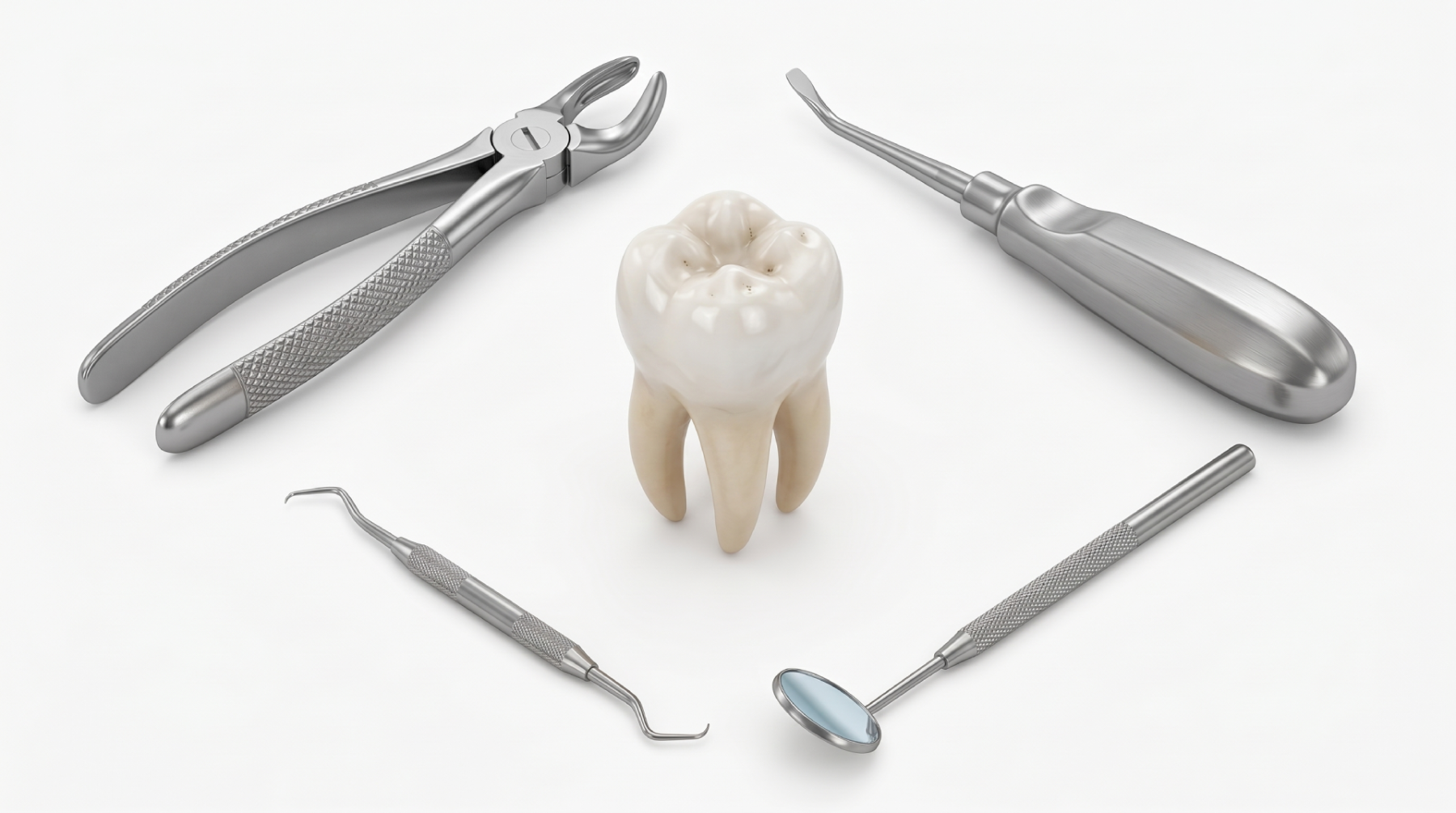
When to extract at the same visit and when to treat the infection first
The timing of the extraction depends on how far the infection has spread and on the patient’s general condition. The dentist distinguishes three scenarios: a localised infection, which allows extraction without delay; a spreading infection, which needs to be brought under control first; and an infection with signs of severity, which is referred to a hospital. The table summarises how the most common situations are handled.
| Situation | What is usually done | Urgency |
|---|---|---|
| Deep decay with a localised abscess, no fever or facial swelling | Extraction at the same visit if the tooth cannot be restored, with drainage of the abscess | High: appointment as soon as possible |
| Gum infection over a partly erupted wisdom tooth (pericoronitis) | Cleaning of the area and treatment of the infection; scheduled extraction afterwards | Medium: assessment within a few days |
| Abscess with facial swelling and fever | Urgent assessment: drainage, antibiotics and extraction when the condition allows | Urgent: same day |
| Chronic granuloma or cyst at the root tip, with little pain | Scheduled extraction with careful cleaning of the socket | Scheduled |
| Difficulty breathing, swallowing or opening the mouth, or swelling spreading to the neck or eye | Immediate hospital care | Emergency |
The dentist waits to control the infection when immediate extraction would add risk. An infection with facial cellulitis or with trismus — inability to open the mouth normally — makes it harder to reach the tooth and reduces the effect of the anaesthetic. In those cases the team drains the pus, prescribes the appropriate treatment and schedules the extraction once the tissues have improved. The dentist decides how long to wait according to how the infection evolves, and the wait includes follow-up checks.
Local anaesthetic works less well in heavily inflamed tissue. Pus and inflammation change the pH of the area and reduce the effect of the anaesthetic, so a tooth with an acute abscess can be harder to numb. The dentist overcomes this with regional block techniques and supplementary doses, and sometimes prefers to drain first and extract a few days later so that the patient is comfortable.
If you are unsure which of these scenarios applies to you, do not wait for the pain to decide for you. The emergency dentist assesses how far the infection has spread, tells you whether extraction is appropriate at that moment and explains the whole plan before starting.
Extraction or root canal: when an infected tooth can be saved
Not every infected tooth is extracted. When the infection comes from the nerve and the tooth keeps enough structure and bone support, a root canal removes the infection and preserves the tooth. Extraction becomes the option when the tooth can no longer be restored with reasonable confidence. The dentist makes that decision from the X-ray and the examination of the tooth, and explains it to the patient before acting.
A root canal removes the infected pulp, cleans and disinfects the canals and seals them to prevent new bacterial colonisation. Our team works with rotary endodontics, a technique that uses rotary instruments to clean and shape the canals. A tooth that has had a root canal usually needs a crown afterwards to protect it from fracture, which matters especially in molars because they bear the heaviest chewing load.
Extraction is indicated when the tooth has no conservative solution. A vertical root fracture, decay that extends below the bone level, very advanced periodontal bone loss or a previous root canal that has failed twice greatly reduce the chances of keeping the tooth. In those cases, insisting on saving the tooth prolongs the infection and delays the definitive solution. The table compares both options.
| Criterion | Root canal | Extraction |
|---|---|---|
| Goal | Remove the infection and keep the tooth | Remove the tooth that causes the infection |
| When it is indicated | Nerve infection with a restorable tooth and good bone support | Root fracture, extensive subgingival decay, insufficient bone or previous failure |
| After treatment | Rebuilding and, normally, a crown | Consider replacing the tooth with an implant |
| Main advantage | Keeps the natural tooth | Resolves the source of infection definitively |
| Consideration | Requires a tooth that can be rebuilt | Leaves a gap that should be replaced |
When extraction is the right decision, the patient should know that it is not a failure but the way to close an infection that has no other outcome. Knowing what happens if the gap is left unreplaced helps in deciding well: we cover it in the article what happens if you don’t replace a missing tooth with an implant.
What an extraction of an infected tooth involves
Extracting an infected tooth follows the same steps as any extraction, with three additions: managing the anaesthetic in inflamed tissue, draining the infection and cleaning the socket more thoroughly. For the basic procedure step by step — diagnosis, anaesthesia, loosening, removal and bleeding control — see our general guide to tooth extraction. Here we focus on what changes when there is infection.
The dentist begins by confirming the extent of the infection with the X-ray and the clinical examination. They check for fever, visible swelling, swollen lymph nodes or limited mouth opening. If the case is complex, the study is completed with a dental CBCT scan, which shows in three dimensions how the roots relate to the inferior alveolar nerve and the maxillary sinus. That study makes it possible to plan the extraction safely.
During the procedure, the dentist numbs the area with the most effective technique for inflamed tissue, removes the tooth and drains any pus found. Next they curette the socket to remove granulation tissue and infected debris. Sometimes the wound is left partly open to aid drainage, or a check-up is scheduled a few days later to confirm that the infection is clearing. The table shows the differences compared with an extraction without infection.
| Aspect | Extraction without infection | Infected tooth extraction |
|---|---|---|
| Prior assessment | X-ray | X-ray and assessment of general signs; CBCT in complex cases |
| Anaesthesia | Usual effect | May need a regional technique or supplementary doses |
| During the extraction | Loosening and removal | Removal, drainage of pus and careful curettage |
| Afterwards | Pain relief and local care | Pain relief, antibiotics if the dentist prescribes them, and a check-up |
| Dry socket risk | Low with good aftercare | May be somewhat higher; aftercare matters more |
Pain during the extraction should be no greater than in an ordinary extraction, because the dentist adjusts the anaesthetic until the area is numb. After the procedure, most patients notice relief because the pressure of the abscess disappears. If you are afraid of the procedure or need several teeth removed, conscious sedation with nitrous oxide lets you go through it relaxed.
Risks of not extracting an infected tooth and warning signs
Leaving an infected tooth untreated allows the infection to advance. A dental infection does not go away on its own: the abscess looks for a way out and can drain towards the gum, the cheek, the floor of the mouth or the neck. When it reaches deep soft tissue, fever, severe facial swelling and difficulty opening the mouth appear, and the problem stops being a dental matter and becomes a medical emergency.
A fistula — a small pimple on the gum that discharges pus — does not mean the infection has healed. It means the abscess has found a drainage route and the source is still active. The pain can disappear for weeks and return more intensely, so the disappearance of a symptom is no reason to delay a consultation. Chronic infections can also destroy bone around the root, which later complicates any implant rehabilitation.
The table shows how to act according to the signs you notice. The severe symptoms match those listed by the UK National Health Service (NHS) as reasons to go immediately to an emergency service.
| Sign | What it suggests | What to do |
|---|---|---|
| Throbbing pain in a tooth and a lump or pimple on the gum | Localised abscess | Book a dental appointment as soon as possible |
| Swelling of the cheek or face, with fever | The infection is spreading to soft tissue | Go to an emergency dentist today |
| Difficulty opening the mouth (trismus) | Possible involvement of deep spaces | Emergency dentist today; if it worsens, hospital |
| Difficulty swallowing or breathing, a swollen eye or changes in vision | Spreading infection with a risk to life | Call 112 or go to the hospital emergency room |
If you have swelling or fever, do not wait to see whether it improves. Our emergency dentist in Valencia assesses the case, drains the infection and decides the right moment for the extraction. For a broader list of situations and how to recognise a genuine emergency, read when to see an emergency dentist. If you also find it hard to open your mouth, read our article on trismus.
When an infected tooth needs oral and maxillofacial surgery
Most infected teeth are extracted in the dental chair, but some cases need oral surgery. The complexity does not depend only on the infection: it depends on the position of the tooth, how close it is to delicate structures and the patient’s health. In those cases the patient moves to the oral and maxillofacial surgery unit, which has the resources, monitoring and experience the procedure requires.
Impacted or horizontally positioned wisdom teeth are the most frequent example. When a lower wisdom tooth is partly covered by gum and bone, it traps bacteria and becomes infected repeatedly, and its root may lie next to the inferior alveolar nerve. Removing it requires opening the gum, removing bone and sectioning the tooth under control. If the infection affects an upper molar, its roots may be very close to the maxillary sinus, and the extraction calls for care to avoid a communication between the mouth and the sinus.
The surgeon also steps in when the infection has formed a sizeable cyst or when the patient has systemic risk factors. Patients with poorly controlled diabetes, on anticoagulant treatment, with a weakened immune system or taking medication that affects bone need closer planning, sometimes coordinated with their doctor. In many of these cases the surgery is performed under conscious sedation so that the patient stays calm.
| Case | Why it is referred to oral surgery | What the surgical unit provides |
|---|---|---|
| Impacted or horizontal wisdom tooth, infected | Proximity to the inferior alveolar nerve and need to open gum and bone | CBCT planning and controlled surgical technique |
| Upper molar with roots close to the maxillary sinus | Risk of communication between mouth and sinus | Careful extraction and follow-up |
| Cyst or extensive lesion associated with the infection | Pathological tissue must be removed | Surgery with cleaning of the bone bed |
| Patient on anticoagulants, diabetic or immunocompromised | Higher risk of bleeding, infection or poor healing | Adapted protocol and coordination with their doctor |
Surgical extraction itself, with its phases and recovery, is explained in the guide to tooth extraction. The difference here is the context: when infection is added to complicated anatomy, the decision about who operates and where determines how safe the outcome is.
Recovery after an infected tooth extraction and how to replace the tooth
Recovery after extracting an infected tooth follows the same logic as any extraction, with more attention to the signs that the infection is clearing. In the first few days pain and swelling decrease progressively. If the dentist has prescribed antibiotics, the patient should finish the course as directed, even if they feel better before the end, because stopping early allows the infection to return.
Essential care protects the clot that closes the socket. The patient avoids rinsing hard, spitting and smoking for the first 24 hours, and gradually resumes normal hygiene while avoiding the wound. From the second day onwards, gentle rinsing with warm salt water is possible. The hour-by-hour routine, including the gauze and eating, is in our guide to aftercare following a tooth extraction. Because a previous infection can increase the likelihood of dry socket, it is worth following that routine especially carefully.
You should contact the clinic if the pain increases after three days instead of decreasing, if the fever returns, if the swelling grows or if you notice a persistent bad taste or discharge. Those signs show that the recovery is not going as expected and that the dentist needs to check the area. A scheduled review a few days later confirms that the gum is healing well and that no source of infection remains.
Once the infection has cleared and the wound has healed, it is time to decide whether to replace the tooth. A gap in the arch makes the neighbouring teeth tilt, the opposing tooth over-erupt and the bone resorb. A dental implant is the option that best imitates a natural tooth. The dentist assesses whether it can be placed after a healing period or whether the previous infection and the state of the bone call for waiting. To learn the cost of each option, see our prices.
Frequently asked questions about infected tooth extraction
Can a tooth be pulled out while it is infected, or do I have to wait?
In most cases it can. If the infection is localised and there is no fever or facial swelling, the dentist usually removes the tooth and drains the abscess at the same visit. If the infection has spread, it is brought under control first and the tooth is extracted afterwards. The dentist decides after examining the area and viewing the X-ray.
Do I have to take antibiotics before an infected tooth is extracted?
Not always. Antibiotics do not cure the cause of the infection, which is the damaged tooth, and they are prescribed only when the dentist considers that the infection is spreading or that the patient is at higher risk. Never self-medicate: it can hide the symptoms and delay treatment.
Can a tooth with a gumboil or abscess be extracted?
Yes. A gumboil is a pus-filled swelling on the gum and an abscess is a localised pocket of pus. In both cases extraction is possible, but when there is fever or facial swelling the dentist usually drains and controls the infection first, so that the anaesthetic works and the procedure is safe.
Does it hurt more to extract an infected tooth?
It should not. The dentist adjusts the anaesthetic until the area is numb, although in heavily inflamed tissue a supplementary technique or dose may be needed. After the extraction, many patients feel relief because the pressure of the abscess disappears.
How long does it take to heal after an infected tooth is removed?
Discomfort usually improves within a few days, although every patient recovers differently. The gum takes several weeks to close and the bone needs months to remodel. If the pain increases or the fever returns, contact the clinic.
How much does it cost to extract an infected tooth in Valencia?
The price depends on whether the extraction is simple or surgical, whether an abscess has to be drained and whether sedation is needed. At the free first visit at Asensio Dental Clinic the examination and X-ray are done and a detailed quote is provided. You can see the price reference on our prices page.
Can an infected tooth be extracted during pregnancy?
Yes, if the case requires it. An active dental infection should not be postponed, because it can affect the mother and the pregnancy more than the procedure itself. The clinic treats emergencies in any trimester and coordinates the procedure with the gynaecologist when necessary. More information on our page about dentistry during pregnancy and breastfeeding.
Who extracts an infected tooth: the dentist or the maxillofacial surgeon?
Most extractions with infection are performed by the dentist at the clinic. When the tooth is an impacted wisdom tooth, lies next to the maxillary sinus or the inferior alveolar nerve, there is a cyst or the patient has systemic risks, the oral and maxillofacial surgery unit steps in.





