 96 382 55 77


Trismus is the limitation or inability to open the mouth normally due to a sustained contraction of the masticatory muscles — particularly the masseter and pterygoid — that reduces jaw opening below 35 millimetres and can develop suddenly or progressively depending on its cause.
If you have tried to open your mouth and cannot, if the pain when attempting to do so is severe, or if your jaw has felt locked since a tooth was extracted or a dental anaesthetic was administered, you are experiencing one of the dental symptoms that causes the most distress and most frequently leads patients to seek emergency care. Identifying what has caused it is the essential first step to resolving it correctly.
At Asensio Dental Clinic, Dr. Lucía Asensio Romero (Registration No. 46002287), specialist in TMJ dysfunction and orofacial pain in Valencia, evaluates and treats trismus both in its acute phase and when it becomes chronic. The first visit is completely free of charge.
What is trismus and how to recognise it
The term trismus derives from the Greek trismos (grinding, creaking) and in dentistry and medicine specifically refers to the pathological reduction of maximum jaw opening. Under normal conditions an adult can open their mouth between 40 and 55 millimetres — approximately the width of three fingers placed vertically between the incisors. Any opening below 35 millimetres sustained over time is considered clinically significant.
Trismus is not a disease in itself but a symptom: the signal that something is causing sustained muscle contraction or a mechanical block of the temporomandibular joint. Identifying the origin is essential because treatment differs radically depending on the cause: infectious trismus requires urgent antibiotic therapy, post-injection muscular trismus resolves with physiotherapy, and trismus from joint locking may require specialist manipulation.
The clinical presentation varies according to the cause and the speed of onset. In trismus of infectious origin the onset is rapid — hours or a few days — and is accompanied by intense pain, visible swelling and occasionally fever. In muscular trismus or trismus due to temporomandibular joint dysfunction, the onset is more gradual and the pain, although present, is of lower intensity.
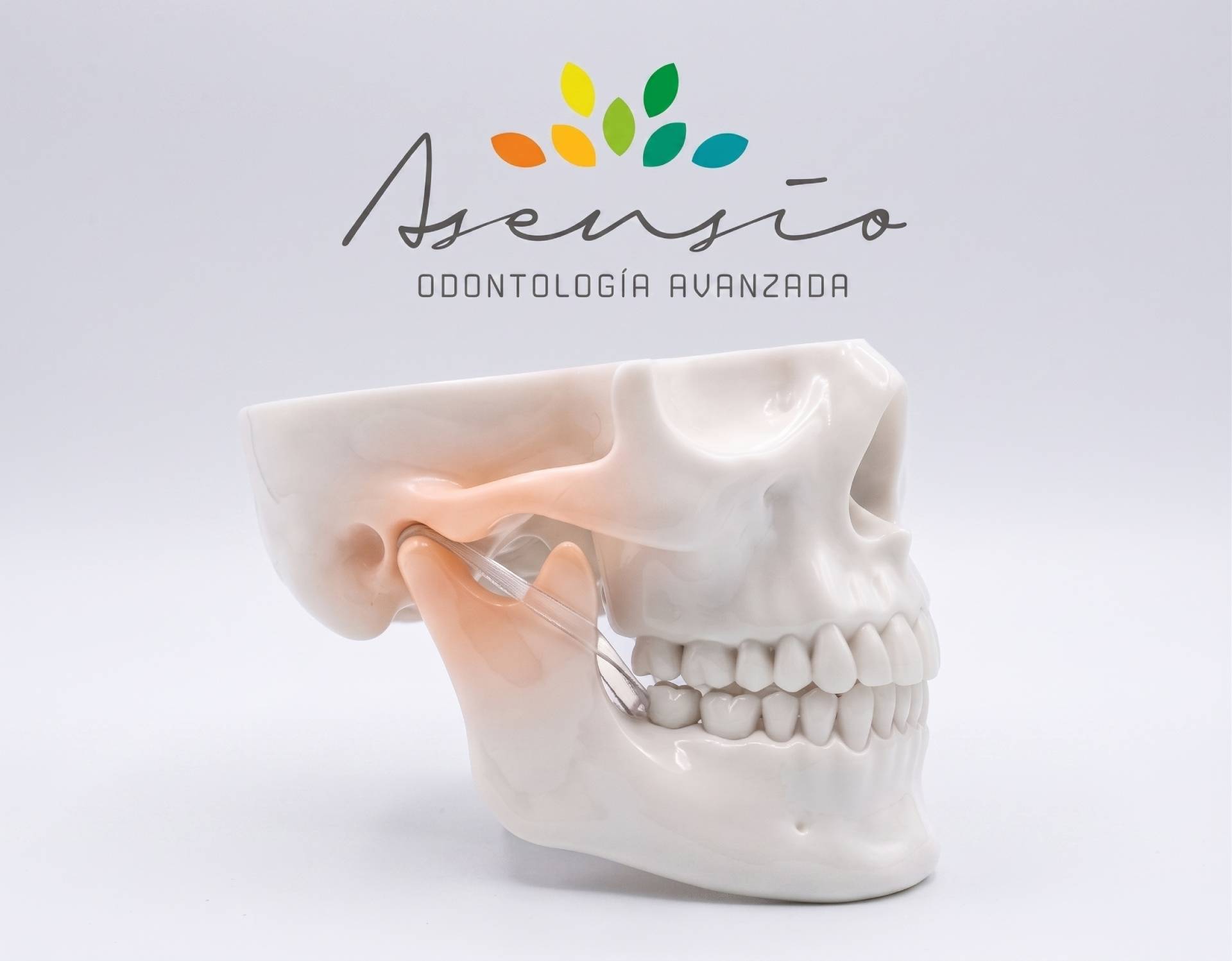
Causes of trismus: why the jaw locks
The causes of trismus are multiple and their correct identification determines treatment. In the dental field the most common are of infectious origin or directly related to dental procedures, but trismus can also have traumatic, neurological or systemic origins.
Dental and orofacial causes
Pericoronitis is the most frequent cause of trismus in young adults: infection of the soft tissue surrounding a partially erupted wisdom tooth generates inflammation that directly affects the pterygoid muscles, producing a reflex contraction that limits jaw opening. If you have noticed difficulty opening your mouth coinciding with pain in the wisdom tooth area, pericoronitis is the first cause to rule out.
Dental abscesses and deep space infections cause trismus when the purulent collection spreads into the anatomical spaces adjacent to the masticatory muscles. An inadequately treated or drained periradicular infection of a lower molar can disseminate into the pterygomandibular or masseteric space and produce rapidly developing trismus with systemic infectious signs. This situation is a genuine emergency: if trismus is accompanied by fever, difficulty swallowing or cervical swelling, you should attend emergency dental care immediately.
Post-anaesthesia trismus appears hours or days after a local anaesthetic injection, particularly after inferior alveolar nerve blocks for lower molar treatment. It may be caused by an intramuscular haematoma from accidental vessel puncture, a local inflammatory reaction or needle contamination. It usually resolves spontaneously within days or weeks with conservative treatment.
TMJ dysfunction with closed lock — when the articular disc becomes displaced without the possibility of reduction — produces sudden-onset trismus: the patient wakes up or suddenly notices they cannot open their mouth more than 25–30 millimetres. It is accompanied by mandibular deviation towards the affected side when attempting to open and the absence of the click the patient previously perceived.
Other causes of trismus
Maxillofacial trauma — fractures of the mandible, condyle or zygomatic arch — causes trismus through oedema, haematoma or bone displacement itself. Post-radiation trismus is a frequent complication in patients treated with radiotherapy to the head and neck: fibrosis of the muscle tissue develops months or years after treatment and is progressive without active physiotherapy. Tetanus is the classic cause of severe trismus — the “lockjaw” — although it is exceptional in populations with correct vaccination coverage.
| Cause | Onset | Accompanying symptoms | Urgency |
|---|---|---|---|
| Pericoronitis | Rapid (days) | Wisdom tooth pain, swelling | High |
| Abscess / deep space infection | Rapid (hours) | Fever, swelling, difficulty swallowing | Emergency |
| Post-anaesthesia (haematoma) | Hours post-injection | Localised pain, no fever | Moderate |
| TMJ lock (displaced disc) | Sudden | Jaw deviation, no click | Moderate-High |
| Bruxism / muscle contracture | Gradual | Morning pain, headache, neck tension | Low |
| Maxillofacial trauma | Immediate | Pain, deformity, haematoma | Emergency |
| Post-radiation | Progressive (months) | Fibrosis, dry mouth | Follow-up |
How to treat trismus depending on its cause
There is no single treatment for trismus: the protocol depends entirely on the identified cause. Attempting to treat infectious trismus with physiotherapy alone, or muscular trismus with antibiotics alone, are common errors that unnecessarily prolong recovery. Correct diagnosis is the essential first step.
Treatment of infectious trismus
When trismus has an infectious origin — pericoronitis, abscess or deep space infection — treatment necessarily involves eliminating the infectious focus and controlling the infection with appropriate antibiotic therapy. In mild to moderate pericoronitis, treatment includes irrigation and debridement of the pericoronary pocket, oral antibiotics and analgesia. In deep space infections with severe trismus, fever or difficulty swallowing, hospital referral is necessary for surgical drainage and intravenous antibiotic therapy.
Extraction of the causative wisdom tooth is always planned on a deferred basis — never during the active infection phase — once the inflammation has been controlled and sufficient jaw opening has been restored to perform the procedure safely.
Treatment of muscular and post-anaesthesia trismus
Trismus of muscular origin — whether post-anaesthesia, from contracture secondary to bruxism or from myofascial tension — responds well to conservative treatment: moist local heat applied over the masseter for 15–20 minutes several times a day, a short course of oral anti-inflammatory medication, and passive progressive opening exercises performed with the fingers. Orofacial physiotherapy with manual therapy techniques, dry needling of trigger points and therapeutic ultrasound accelerates recovery in cases that do not respond to home treatment.
A night guard is indicated when muscular trismus is associated with bruxism or TMJ dysfunction: it reduces nocturnal parafunctional activity that maintains muscle contracture and facilitates relaxation of the pterygoids and masseter during sleep.
Treatment of trismus from joint locking
Closed lock of the TMJ due to disc displacement without reduction requires specialist evaluation. In the acute phase — within the first 72 hours — a manual reduction manoeuvre may be attempted to reposition the disc and restore normal opening. Beyond this window, treatment combines specific physiotherapy, a repositioning splint and in refractory cases arthrocentesis or arthroscopy of the TMJ. At the Orofacial Pain Unit we evaluate each case with clinical examination and imaging to determine the most appropriate protocol.
Exercises for trismus: progressive jaw opening
Progressive mandibular opening exercises are the cornerstone of conservative treatment for muscular trismus and an essential complement to any specialist treatment. They should not be performed during an active infection phase, but are appropriate for post-anaesthesia trismus, contracture trismus and as maintenance following joint lock treatment.
The basic protocol involves placing the index finger between the upper and lower incisors and applying gentle, sustained pressure for 30 seconds in the opening direction, without forcing to the point of intense pain. This is repeated 10 to 15 times, three or four sessions per day. Opening should increase gradually over days — if there is no improvement or it worsens, it is a signal that the diagnosis or treatment requires review.
Progressive opening devices such as screw-type mouth openers or graduated finger spreaders allow more controlled and reproducible force application, and are particularly indicated in post-radiation trismus where muscle fibrosis makes daily mechanical physiotherapy essential to prevent progression of the limitation.
Frequently asked questions about trismus
How long does trismus last?
It depends entirely on the cause. Mild post-anaesthesia trismus from an intramuscular haematoma typically resolves within 1 to 3 weeks with conservative treatment. Trismus from pericoronitis improves within days once the infection is controlled. A TMJ articular lock may require weeks or months of specialist treatment. Without correct diagnosis, trismus can become chronic and significantly more difficult to resolve.
Is trismus a dental emergency?
It depends on the accompanying symptoms. If trismus presents alongside fever, cervical or submandibular swelling, difficulty swallowing or difficulty breathing, it is a genuine emergency requiring immediate attention — it may be a sign of a deep space infection with risk of spread. If trismus is isolated, without fever and of gradual onset, it can be managed at a scheduled appointment within the following days.
Should you apply heat to trismus?
Moist local heat is indicated for trismus of muscular origin — post-anaesthesia, contracture from bruxism, myofascial tension — because it relaxes the musculature and improves local circulation. It should not be applied during active infectious trismus: heat can encourage spread of the infection. If fever, swelling or suppuration are present, heat application is contraindicated until the infectious focus has been controlled.
Can trismus become permanent?
In most cases trismus is reversible with appropriate treatment. However, post-radiation trismus not treated with active physiotherapy can lead to progressive and irreversible muscle fibrosis that permanently reduces jaw opening. Untreated chronic joint lock can also generate degenerative changes in the mandibular condyle that hinder complete recovery of jaw opening.
Is trismus after a tooth extraction normal?
A mild degree of limited opening in the days immediately following wisdom tooth extraction is common and expected: it is the normal inflammatory response of the adjacent muscle tissue. What is not normal is severe limitation from the first day, progressive worsening after the first three days, or limitation accompanied by fever, an intense unpleasant taste or increasing facial swelling. In those cases, contact the clinic to rule out infectious complications.
Which specialist treats trismus?
Depending on the cause, trismus may require the intervention of different specialists: the dentist or oral surgeon for cases of infectious or dental origin, the TMJ and orofacial pain specialist for cases of articular or muscular origin, the orofacial physiotherapist as part of conservative treatment, and the physician or maxillofacial surgeon in cases of traumatic or severe infectious origin. At Asensio Dental Clinic we coordinate the diagnosis and refer to the appropriate specialist based on the identified cause.