 96 382 55 77


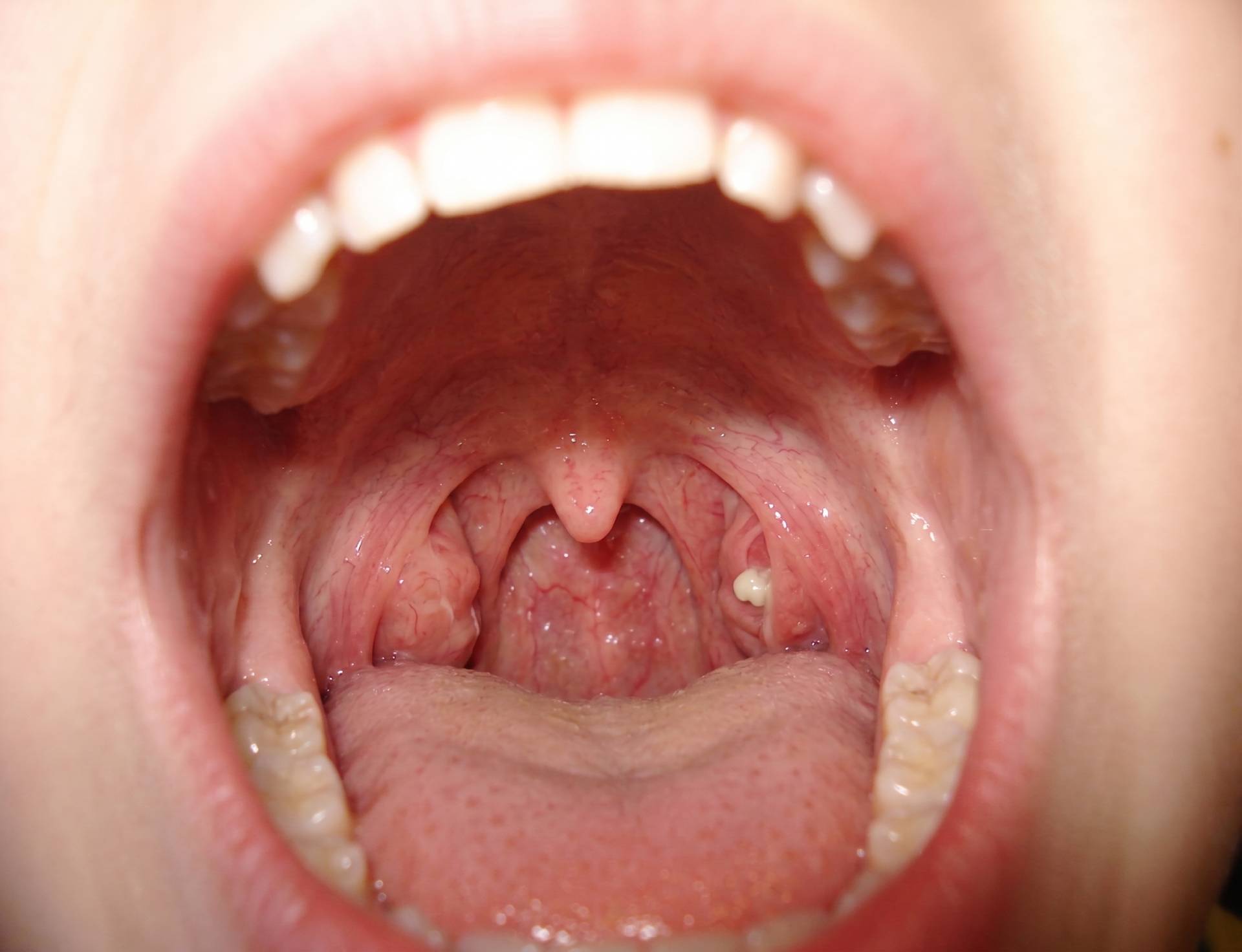
Tonsil stones — also known as tonsilloliths — are accumulations of organic debris including dead cells, mucus, bacteria and food particles that calcify in the crypts of the palatine tonsils, forming small whitish or yellowish concretions of soft or semi-hard consistency.
If you have noticed white lumps on your tonsils accompanied by persistent bad breath that does not improve with brushing, they are most likely tonsil stones. They are extremely common, completely benign in most cases, and yet cause disproportionate anxiety in those who discover them because their appearance can be confused with an active infection.
At Asensio Dental Clinic, Dr. Lucía Asensio Romero (Registration No. 46002287), specialist in oral medicine in Valencia, evaluates and treats recurrent tonsil stones associated with chronic halitosis or frequent episodes of tonsillitis. The first visit is completely free of charge.
What are tonsil stones and why do they form
The palatine tonsils are not smooth surfaces: they are lined with deep folds and crevices called tonsillar crypts. These crypts function as filters, trapping particles and bacteria so that the immune system can process them. However, in certain individuals their morphology — deeper or more branched than usual — favours the accumulation of organic debris that the natural self-cleaning mechanism cannot eliminate efficiently.
The materials that accumulate in these crypts are primarily dead epithelial cells, post-nasal mucus, anaerobic bacteria from the oral cavity and food particles. Over time, this mixture dehydrates and mineralises with calcium and phosphorus from saliva, forming the hard or semi-hard concretions characteristic of tonsil stones.
Their usual size ranges from one to several millimetres, although in exceptional cases they can reach several centimetres. The colour varies from white to yellow depending on the degree of calcification and bacterial composition. Their characteristic odour — intense and unpleasant — is caused by volatile sulphur compounds produced by the anaerobic bacteria colonising the stone, the same family of compounds responsible for bad breath or halitosis.
Factors that predispose to their formation include the individual morphology of the tonsillar crypts — genetically determined —, repeated episodes of tonsillitis that generate scarring and deeper crypts, poor oral hygiene, chronic mouth breathing that reduces saliva flow, and excessive post-nasal mucus production in people with allergies or chronic sinusitis.
Symptoms of tonsil stones
The most frequent symptom — and the one that causes the most alarm — is directly seeing the whitish lumps on the tonsils, usually discovered accidentally in the mirror or when coughing. However, tonsil stones can be present and symptomatic without being visible, especially when lodged in deep crypts that cannot be seen with the naked eye.
Persistent halitosis is the most common symptom when tonsil stones are not visible: the bad breath does not respond to brushing or mouthwash because its origin is not in the mouth but in the tonsillar concretion. It is one of the causes of chronic halitosis that is diagnosed late because patients do not associate bad breath with the tonsils.
Other common symptoms include a feeling of a foreign body or irritation in the throat that triggers the urge to clear the throat frequently, mild pain or discomfort when swallowing — particularly when the stone is larger — and occasionally referred ear pain due to the anatomical proximity between the tonsils and the glossopharyngeal nerve.
| Symptom | Frequency | Direct cause |
|---|---|---|
| Visible white lumps on the tonsils | Very common | Calcified concretion in superficial crypt |
| Bad breath unresponsive to oral hygiene | Very common | Bacterial volatile sulphur compounds |
| Foreign body sensation / throat clearing | Common | Mechanical irritation of the crypt |
| Mild discomfort or pain when swallowing | Moderate | Size of the tonsil stone |
| Referred ear pain | Less common | Shared glossopharyngeal nerve |
| Irritative cough | Less common | Expulsion reflex |
How to remove tonsil stones: safe methods
Before attempting any removal method it is important to understand that small tonsil stones are expelled on their own frequently — when coughing, swallowing or gargling — and that aggressive manipulation of the tonsils can cause bleeding, micro-injuries to the mucosa, or push the stone into deeper crypts, worsening the situation.
Home remedies to remove tonsil stones
Warm saltwater gargles are the safest and most effective starting method: dissolving half a teaspoon of salt in a glass of warm water and gargling deeply for 30 seconds several times a day creates a movement that can dislodge small stones and reduces the bacterial load in the crypts. Hydrogen peroxide diluted 50/50 with water has a similar effect with stronger action against anaerobic bacteria.
A water flosser at low pressure is the most effective home method for visible tonsil stones: directing a low or medium pressure stream of water directly at the crypt where the stone is lodged can dislodge it without physical contact. It is important not to use high pressure, which can damage the tonsillar mucosa.
Using a damp cotton swab to press gently alongside — not directly on — the stone can help expel it if it is in a shallow, accessible crypt. This method requires good lighting, a mirror and considerable care to avoid triggering the gag reflex or damaging the tonsillar tissue.
What should never be done is attempting removal with hard or sharp objects, applying sudden direct pressure to the tonsil, or forcing extraction if the stone does not come out easily.
Professional treatment for tonsil stones
When tonsil stones are recurrent, large, lodged in deep inaccessible crypts, or accompanied by severe chronic halitosis affecting quality of life, treatment should be carried out by a specialist. The specialist can perform a tonsillar crypt irrigation and suction using appropriate instruments, removing the concretions completely and safely.
In cases of highly recurrent tonsil stones with pronounced cryptic tonsil morphology, the ENT specialist may consider laser cryptolysis — which seals the crypts without removing the tonsils — or ultimately tonsillectomy, which definitively resolves the problem by eliminating the tissue where the stones form.
From a dental perspective, the oral medicine specialist can identify and treat the oral factors contributing to tonsil stone formation: associated halitosis, anaerobic bacterial flora in the oral cavity and hygiene factors that favour debris accumulation in the crypts.
How to prevent tonsil stones
Effective prevention of tonsil stones targets modifiable factors: oral hygiene, hydration and the management of anatomical and systemic factors that favour accumulation in the crypts. In people with particularly deep tonsillar crypts or repeated episodes of tonsillitis, complete prevention may not be possible, but the frequency and size of concretions can be significantly reduced.
Thorough and systematic daily oral hygiene — correct brushing twice a day, daily interdental cleaning and use of a tongue scraper — reduces the load of anaerobic bacteria in the oral cavity available to colonise the tonsillar crypts. The tongue is the main reservoir of these bacteria and its daily cleaning has a direct impact on the frequency of tonsil stone formation.
Adequate hydration — between 1.5 and 2 litres of water per day — maintains salivary flow at optimal levels. Saliva has a self-cleaning function for the crypts that is significantly reduced by dehydration or chronic mouth breathing, which dries the mucosa and encourages accumulation. Regular saltwater or alcohol-free mouthwash rinses complement this cleansing action.
Managing post-nasal mucus production — by treating allergies or chronic sinusitis if present — reduces one of the primary materials that accumulates in the crypts. Regular check-ups with a specialist allow early detection and removal of concretions before they calcify and grow in size.
Frequently asked questions about tonsil stones
Are tonsil stones dangerous?
No. Tonsil stones are benign in the vast majority of cases: they are not a sign of cancer or serious disease. Their only real impact is local discomfort, bad breath and the anxiety they cause when discovered. However, if they are accompanied by severe pain when swallowing, fever, marked asymmetry between the two tonsils or rapid growth of one of them, a medical evaluation is necessary to rule out other causes.
Why do tonsil stones smell so bad?
The characteristic intense odour of tonsil stones is caused by volatile sulphur compounds — hydrogen sulphide, methyl mercaptan and dimethyl sulphide — produced by the anaerobic bacteria colonising the stone. These are exactly the same compounds responsible for oral bad breath. Even small tonsil stones can produce an odour disproportionate to their size.
Can I remove tonsil stones myself?
Small, superficial tonsil stones can be safely removed using gargles, a low-pressure water flosser or a damp cotton swab. What should not be done is using hard objects, applying sudden pressure or attempting to extract deep-seated stones, as this can cause bleeding or push the stone into deeper crypts. If they do not come out easily or keep recurring, consulting a specialist is strongly recommended.
Do tonsil stones cause bad breath?
Yes, and they are one of the most frequently overlooked causes of chronic halitosis. The bad breath produced by tonsil stones does not respond to brushing or mouthwash because its origin is not in the teeth or tongue, but in the tonsillar crypts. If you suffer from persistent bad breath despite good oral hygiene, tonsil stones should be ruled out as a cause.
Do tonsil stones go away on their own?
Small tonsil stones are frequently expelled on their own when coughing, swallowing or with regular gargling. Larger stones or those lodged in deep crypts tend to persist and grow progressively if not removed. In people with highly developed tonsillar crypts, the tendency is towards continuous recurrence even after regular removal.
Can children get tonsil stones?
Yes, although they are more common in adults. Children with enlarged tonsils — tonsillar hypertrophy — and repeated episodes of tonsillitis are at greater risk of developing them. In children, tonsil stones are frequently confused with the white patches of an active infection, so when in doubt a professional assessment is always recommended.