 96 382 55 77


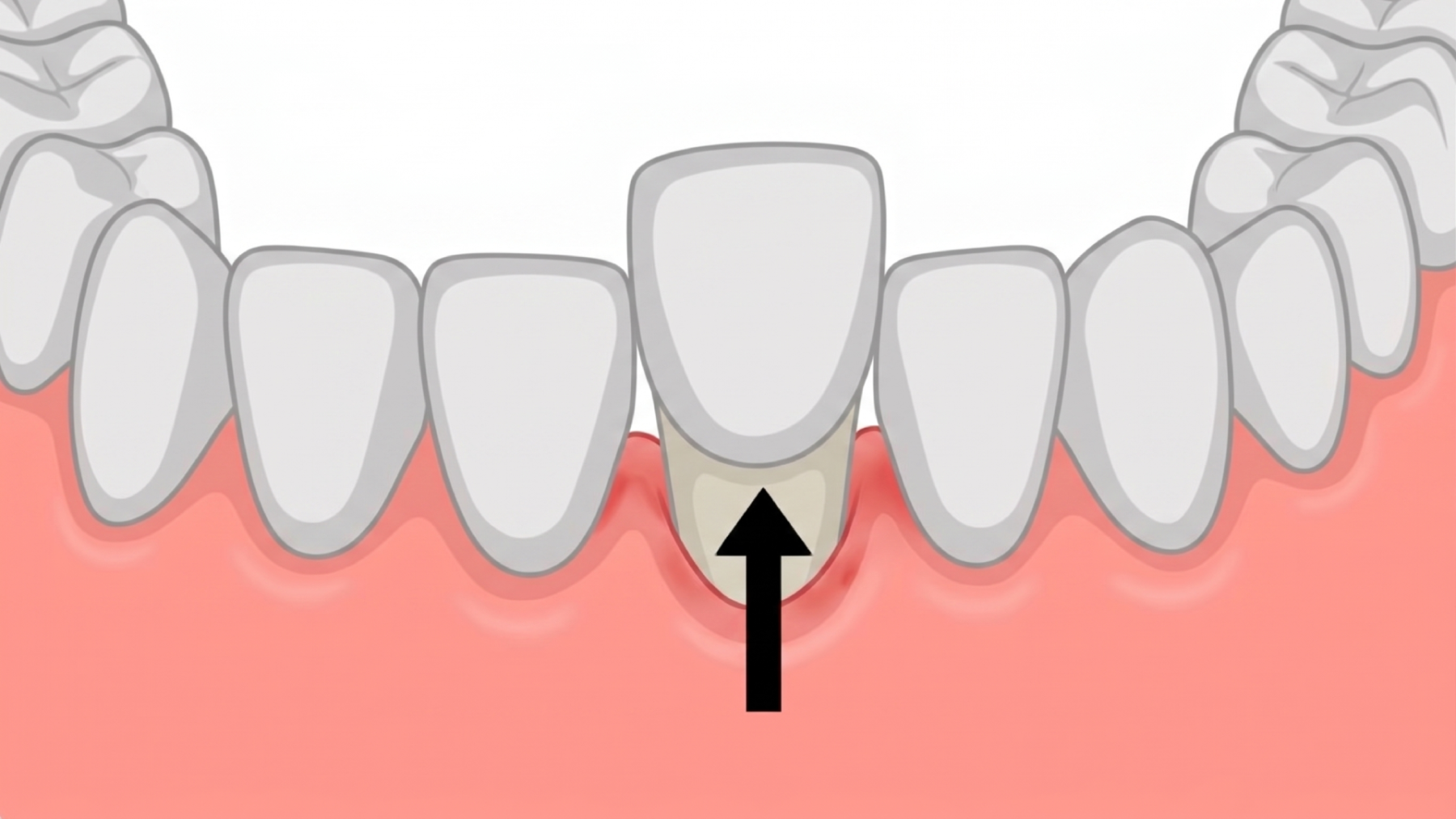
Dental extrusion is the displacement of a tooth out of its normal position in the alveolar bone, either abruptly due to trauma or gradually due to the loss of the opposing tooth, periodontal disease, or poorly controlled orthodontic forces.
If you’ve noticed that a tooth looks longer than usual, moves more than it should, or has shifted position without any blow you can remember, it’s natural to be concerned. And if the change happened suddenly after an accident or a blow to the mouth, it’s a situation that needs immediate attention. In this guide we explain why dental extrusion happens, how to tell traumatic causes apart from gradual ones, and which treatment applies to each case.
At Asensio Dental Clinic, Dr. Lucía Asensio Romero (Registration No. 46002287) assesses every case of dental extrusion to determine whether the cause is traumatic, periodontal, or orthodontic, since the correct treatment depends entirely on that cause. The first visit is completely free. To see the full range of conditions we treat, visit our oral medicine in Valencia page.
What dental extrusion is and how it shows up
In dentistry, the term extrusion describes a tooth’s movement in a coronal direction — out of the bone — along the long axis of the tooth. It’s exactly the opposite movement to intrusion, in which the tooth sinks into the bone. When this displacement happens in a controlled, deliberate way as part of treatment — for example, to gain tooth structure before placing a crown — it’s called forced orthodontic extrusion, a distinct clinical procedure from the one this article covers. When it happens unintentionally, it’s a symptom that needs a diagnosis.
Unwanted dental extrusion shows up in two very different scenarios. The first is traumatic extrusion, or extrusive luxation: a direct blow partially displaces the tooth out of its socket within seconds, leaving it visibly longer with increased mobility. It’s common in upper front teeth after falls, sports accidents, or blows to the face, and it affects both baby teeth and permanent teeth. The second scenario is gradual or passive extrusion: the tooth slowly migrates in a coronal direction over months or years, almost always because it has lost contact with the opposing tooth it used to bite against — the one that “stopped” it when chewing — and it drifts unopposed into that empty space.
Recognising which of the two scenarios applies to your case is the first step in diagnosis: if the tooth has shifted within hours, coinciding with a blow, this is a traumatic dental emergency. If the change has been gradual and you don’t recall any trauma, the cause is almost always periodontal, prosthetic, or orthodontic, and although it’s not an immediate emergency, it does need assessment, because it tends to get worse over time.
Causes of dental extrusion
Identifying the exact cause of dental extrusion is essential, because it completely determines the treatment. The most common causes we see in the clinic fall into four groups, and they’re not mutually exclusive: a patient with periodontal disease and a missing opposing tooth is carrying two risk factors at once.
Dental trauma
A direct blow can partially tear the periodontal ligament fibres that hold the tooth to the bone, pushing it out of its socket without fully expelling it — unlike avulsion, where the tooth is completely lost. It’s the most common cause in children and adolescents, and it needs attention within the first few hours to maximise the chances of saving the tooth. If the displacement was caused by a recent blow, see our page on when to see an emergency dentist.
Missing opposing tooth, not replaced
This is the most common cause of gradual extrusion. When a tooth is lost and not replaced in time, the opposing tooth — the one it used to bite against — no longer meets any resistance and slowly drifts into that empty space, pulling the gum and supporting bone along with it. Over time this reduces the bone height available and can complicate future placement of a dental implant in that area, precisely because of the space and bone loss the extrusion itself causes.
Advanced periodontal disease
When periodontal disease has destroyed a significant part of the bone and ligament supporting the tooth, it loses the anchorage it needs to stay in place and can extrude even without losing contact with the opposing tooth. It’s usually accompanied by tooth mobility, bleeding gums, and, in advanced stages, pain when chewing.
Bruxism and uncontrolled orthodontic forces
Poorly controlled bruxism and certain orthodontic treatments carried out without proper supervision can apply unbalanced vertical forces to a specific tooth and cause progressive extrusion. In bruxism cases, a night bite guard is usually part of the treatment to slow its progression.
| Cause | Type of extrusion | Onset | Urgency |
|---|---|---|---|
| Dental trauma | Acute | Minutes – hours | High — dental emergency |
| Missing opposing tooth | Gradual | Months – years | Low — but progressive |
| Periodontal disease | Gradual | Months – years | Medium — depends on progression |
| Bruxism / uncontrolled orthodontics | Gradual | Weeks – months | Low — but progressive |
Treating dental extrusion according to its cause
There’s no single treatment for dental extrusion: the protocol depends entirely on whether the cause is traumatic or gradual, and within the latter, on what the underlying cause is.
Traumatic extrusion: treatment in the first few hours
After a traumatic extrusion, the tooth needs to be manually repositioned in its socket as soon as possible and stabilised with a flexible splint for 2 to 4 weeks, bonded to the neighbouring teeth to hold it in place while the periodontal ligament heals. Pulp vitality must be assessed in the following weeks, since the trauma may have damaged the tooth’s blood and nerve supply and later require root canal treatment. The sooner treatment is received, the better the prognosis for saving the tooth.
Extrusion caused by a missing opposing tooth
Here treatment addresses the cause, not just the symptom: replacing the missing tooth with a dental implant restores occlusal contact and stops the extrusion from progressing. If the extruded tooth has already drifted significantly, it may be necessary to combine the implant with prior orthodontic repositioning of the displaced tooth, or, in advanced cases, with occlusal adjustment or crown lengthening to correct the tooth’s height before restoring it.
Extrusion caused by periodontal disease
Periodontal treatment to control the infection and stop bone loss is the priority step; without controlling the underlying disease, any attempt to reposition the tooth will fail in the medium term. Once periodontal health is stabilised, splinting the affected teeth or gentle orthodontic treatment can be considered to improve their position.
Orthodontic repositioning of the extruded tooth
When the extruded tooth still has enough bone support, orthodontic treatment in Valencia — with braces or aligners — can gradually reposition it using controlled intrusive forces, the reverse movement to the one that caused the problem in the first place. It’s a slow treatment that requires specialist supervision, precisely because a miscalculated force is one of the causes of extrusion described above.
How to prevent dental extrusion
In most cases, preventing dental extrusion means addressing its cause before the tooth starts to shift. It’s a condition that progresses silently over months, which is why regular check-ups are the main tool for catching it early.
The most effective preventive measure is replacing any missing tooth within a reasonable timeframe, ideally within the first few months after extraction. The longer a gap goes without a tooth, the higher the risk that the opposing tooth will start to extrude and that bone will be lost in the area, later complicating implant placement. Keeping up with regular periodontal check-ups makes it possible to catch supporting bone loss before it causes mobility or displacement, and treating bruxism with a bite guard stops uncontrolled nighttime forces from acting on the teeth for years without the patient noticing.
In orthodontic treatment, choosing a clinic with experience and regular in-person clinical follow-up — rather than remote appliances without in-person supervision — significantly reduces the risk of uncontrolled extrusive forces on individual teeth.
Frequently asked questions about dental extrusion
Can dental extrusion be corrected?
In most cases, yes, as long as the cause is identified and treated in time. A tooth with mild to moderate gradual extrusion can be repositioned with orthodontics once the underlying cause is under control. In severe traumatic extrusions or very advanced cases with significant bone loss, extraction and replacement with an implant may be necessary.
Is dental extrusion painful?
Traumatic extrusion is usually painful at the moment of the blow and in the following days. Gradual extrusion, on the other hand, rarely hurts on its own in its early stages, although it can cause discomfort when chewing once the tooth starts interfering with the bite.
What happens if dental extrusion isn’t treated?
If left untreated, the tooth keeps shifting and can end up interfering with the bite, causing sensitivity, increasing the risk of mobility and tooth loss, and complicating future treatment — for example, making implant placement in the area more difficult due to the associated bone loss.
How long does it take to treat dental extrusion?
It depends on the cause. A splint after trauma is kept in place for 2 to 4 weeks. Orthodontic repositioning of a gradually extruded tooth can take several months, since it has to be done with gentle, controlled forces to avoid damaging the periodontal ligament.
Is dental extrusion different in children?
Yes. In baby teeth, mild traumatic extrusion can often resolve on its own without active repositioning, always under a dentist’s supervision. In the permanent teeth of children and teenagers, management is similar to that of an adult, though with particular attention to the tooth’s pulp vitality, which has a greater capacity to recover in younger patients.